Palazzo Barberini is open from Tuesday to Sunday (10am – 7pm)

The Ultimate Guide to Understanding Bernini’s Genius | Palazzo Barberini
Unlock the secrets of Gian Lorenzo Bernini’s artistic revolution. From his early marble masterpieces to the grand architecture of St. Peter's, discover the definitive guide to his creative genius.
1/5/202614 min read
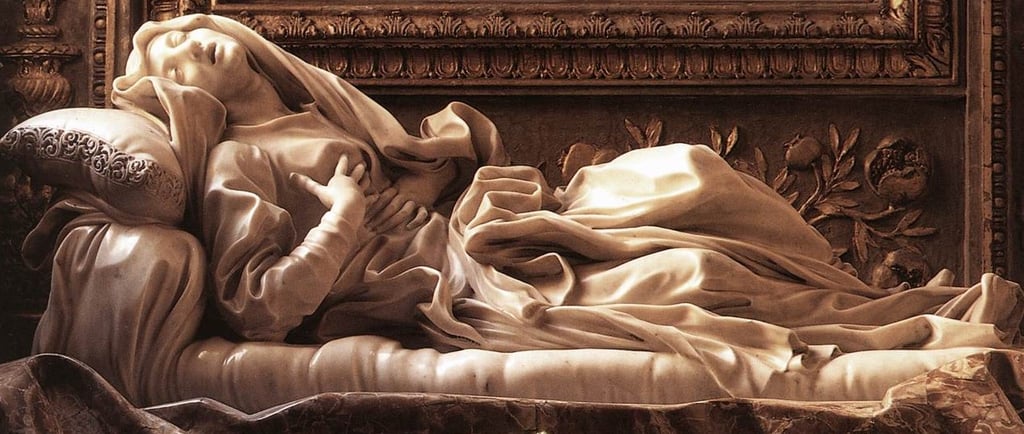
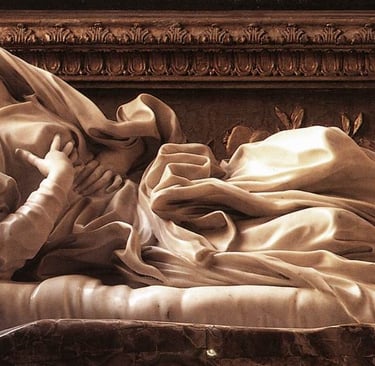
Gian Lorenzo Bernini transformed marble into living, breathing art that still captivates millions of visitors in Rome today. His revolutionary approach to baroque sculpture techniques and architectural design changed how we experience art forever.
This guide is perfect for art enthusiasts, history buffs, and travelers planning Rome visits who want to truly understand what makes Bernini's work so extraordinary. You'll discover why his pieces like the Bernini David statue and Bernini Ecstasy of Saint Teresa continue to amaze viewers centuries later.
We'll explore Bernini's most famous Bernini masterpieces and reveal the innovative methods behind his lifelike sculptures. You'll also learn about his stunning Bernini Rome architecture projects that transformed the Eternal City. Finally, we'll examine how Bernini's artistic legacy shaped baroque art history and continues influencing artists today.
Get ready to see Bernini sculpture through fresh eyes and understand why this master artist earned his place as the greatest sculptor since Michelangelo.
Discover Bernini's Revolutionary Artistic Vision
Master the fusion of sculpture and architecture in his groundbreaking works
Gian Lorenzo Bernini completely rewrote the rules about where sculpture ends and architecture begins. His genius lay in creating works that couldn't be easily categorized - they were sculptures that transformed entire spaces and architectural elements that told emotional stories. Take his famous colonnade at St. Peter's Square, where massive stone columns don't just support a structure but create an embracing gesture that welcomes pilgrims from around the world.
Bernini sculpture works like the Tomb of Pope Alexander VII demonstrate this revolutionary approach perfectly. The marble figures seem to emerge from and interact with the architectural framework itself. Death holds up a marble drapery that appears to flutter in an impossible breeze, while the Pope kneels in prayer above. The architectural elements - the doorway, the colored marbles, the bronze details - all work together with the sculptural figures to create a unified artistic experience.
This wasn't just decoration slapped onto buildings. Bernini thought about how people would move through spaces, how light would hit his works at different times of day, and how the viewer's emotional journey would unfold. His Scala Regia in the Vatican Palace uses clever perspective tricks and dramatic lighting to make a cramped stairway feel like a grand royal ascent. Every architectural detail serves the larger artistic vision.
Understand how he transformed marble into lifelike human emotion
Watching Bernini work with marble was like watching a magician pull life itself from cold stone. His Gian Lorenzo Bernini art reveals an almost supernatural ability to make hard marble appear soft, warm, and breathing with emotion. The famous Bernini David statue captures the biblical hero at the exact moment of action - his face twisted with determination, muscles tensed, about to release the stone that will fell Goliath.
But Bernini's real breakthrough wasn't just in technical skill - it was in psychological depth. The Bernini Ecstasy of Saint Teresa shows the saint in a moment of divine rapture that's both spiritual and intensely human. Her marble robes seem to float weightlessly, her face shows genuine ecstasy, and even the angel's expression carries a knowing tenderness. Bernini didn't just carve what these figures looked like; he carved what they felt like.
The artist achieved these effects through revolutionary baroque sculpture techniques that previous generations couldn't imagine. He used deep undercutting to create dramatic shadows, polished certain areas to a mirror shine while leaving others rough for contrast, and positioned figures to catch and play with natural light. His marble hair actually looks like it has individual strands, his fabric appears to have texture and weight, and his skin seems warm to the touch.
Learn why his dynamic compositions changed art forever
Before Bernini, most sculptures stood politely in place, content to be admired from a respectful distance. Bernini masterpieces exploded this convention by creating compositions that seemed caught in mid-action, pulling viewers into the drama unfolding before them. His figures twist, leap, and gesture with an energy that makes you want to step back or lean in closer.
This dynamic approach completely changed how artists thought about space and movement. Bernini's figures don't just occupy space - they command it, transform it, and invite you into it. Apollo and Daphne shows the nymph transforming into a laurel tree just as Apollo's fingers touch her skin. The composition captures a split second of transformation so vividly that you can almost hear her gasp and feel the bark growing under Apollo's hands.
These compositions worked because Bernini understood something fundamental about human psychology: we're drawn to movement, to stories caught in mid-telling, to moments of high drama and emotion. His artistic legacy spread throughout Europe as other artists tried to capture the same sense of life and movement in their own work. The static, idealized figures of earlier eras suddenly seemed lifeless by comparison. Bernini had shown that art could be a window into living, breathing, feeling moments rather than just pretty objects to contemplate from afar.
Unlock the Secrets Behind Bernini's Most Iconic Masterpieces
Experience the dramatic intensity of Apollo and Daphne
This Bernini sculpture captures one of mythology's most heart-wrenching moments with breathtaking precision. The marble tells the story of Apollo's desperate pursuit of the nymph Daphne, who transforms into a laurel tree to escape his advances. What makes this piece extraordinary isn't just the technical mastery—it's how Bernini froze the exact moment of transformation.
Look closely at Daphne's fingers sprouting delicate leaves, her toes taking root in the ground. The terror in her eyes contrasts sharply with Apollo's shocked realization that his desire has caused this tragic metamorphosis. Bernini masterpieces like this one demonstrate his unparalleled ability to make cold marble express the most intense human emotions.
The sculpture's positioning creates multiple viewing angles, each revealing different emotional layers. From one side, you see Apollo's confident stride; from another, Daphne's desperate flight. This dynamic movement was revolutionary for its time, breaking away from static Renaissance poses to embrace pure baroque drama.
Marvel at the spiritual power of The Ecstasy of Saint Teresa
Perhaps no other Bernini sculpture captures religious mysticism as powerfully as this altarpiece in Rome's Santa Maria della Vittoria. The scene depicts Saint Teresa of Ávila's divine vision, where an angel pierces her heart with a golden arrow of divine love.
Teresa's expression transcends earthly existence—her eyes roll back, her mouth parts slightly, her entire body seems to float on billowing marble clouds. The angel's gentle smile and delicate touch create an intimate moment between the earthly and divine. Hidden lighting from above bathes the scene in golden rays, making the white marble appear luminous and otherworldly.
Bernini architectural works often incorporated theatrical elements, but here he created an entire spiritual theater. Bronze rays burst from above like heavenly light, while the Cornaro family members observe from theater boxes carved into the chapel walls, making viewers feel like witnesses to a miraculous event.
Appreciate the architectural genius of St. Peter's Baldachin
Standing beneath the soaring dome of St. Peter's Basilica, this massive bronze canopy represents Bernini's architectural mastery at its finest. Rising nearly 100 feet high, the Baldachin marks the tomb of Saint Peter with unprecedented grandeur.
The twisted bronze columns reference ancient Roman examples while incorporating baroque flourishes that seem to spiral upward toward heaven. Bees from the Barberini coat of arms crawl up the columns, honoring Pope Urban VIII who commissioned the work. The design creates visual movement even in this monumental structure—the bronze appears to flutter and dance despite its enormous weight.
What's remarkable about this Bernini architectural work is how it solves a massive spatial problem. The Baldachin needed to mark the sacred spot without overwhelming the basilica's interior or competing with Michelangelo's dome above. Bernini achieved perfect proportional harmony, creating a focal point that draws the eye upward while maintaining the space's sense of openness.
Decode the symbolism in David's fierce determination
Bernini's David breaks every rule of classical sculpture. Unlike Michelangelo's contemplative youth, this David is caught mid-action, his face twisted with concentration and effort. The moment captured is the split second before the stone leaves his sling—pure kinetic energy frozen in marble.
The sculpture's positioning demands space around it. David's body twists dynamically, his left foot planted firmly while his torso coils like a spring. His brow furrows in intense focus, lips pressed tight with determination. This isn't idealized beauty—it's raw human struggle and faith in divine assistance.
The symbolism runs deeper than the biblical story. Created during the Counter-Reformation, this David represents the Catholic Church's fight against Protestant challenges. The young shepherd's unwavering faith mirrors the Church's confidence in ultimate victory. Bernini sculpture techniques here create psychological intensity that makes viewers feel they're witnessing the actual biblical moment, complete with its spiritual significance and human drama.
Master Bernini's Innovative Sculpture Techniques
Discover his revolutionary approach to capturing movement in stone
Bernini sculpture transformed the very nature of what marble could express. While previous sculptors created static, posed figures, Bernini made stone come alive with dynamic energy. His figures twist, reach, and move through space as if caught mid-action.
Take his famous Bernini David statue - instead of showing David before or after the battle like Michelangelo did, Bernini captured the exact moment of the throw. David's body coils with tension, his face contorted with concentration and determination. The sculpture practically vibrates with kinetic energy, and you can almost see the stone about to fly from his sling.
Bernini achieved this illusion through careful study of anatomy and movement. He would pose models in dramatic positions, sometimes having them hold difficult poses for hours while he studied how muscles, tendons, and fabric behaved under stress. He understood that capturing a single moment of intense action could suggest the entire sequence of movement.
His technique involved carving flowing lines that guide the eye around the sculpture, creating visual rhythms that mimic actual motion. Drapery becomes a powerful tool in his hands - fabric seems to billow and flow, responding to invisible winds and the movement of the body beneath.
Learn how he achieved unprecedented emotional expression
Emotional intensity sets Gian Lorenzo Bernini art apart from anything that came before. His figures don't just display emotion - they embody it so completely that viewers feel pulled into their psychological states.
The secret lay in Bernini's obsessive attention to facial expressions and body language. He studied how grief, ecstasy, pain, and joy manifested physically. His figures' faces show micro-expressions - slightly parted lips suggesting breathlessness, eyes rolled back in spiritual rapture, or brows furrowed in concentration.
His most powerful example remains the Bernini Ecstasy of Saint Teresa. Teresa's face captures the complex mixture of spiritual and physical sensation described in her mystical writings. Her slightly open mouth, closed eyes, and relaxed hand all suggest the overwhelming nature of her divine vision. The angel's gentle smile creates a perfect counterpoint to Teresa's intensity.
Bernini also used the entire body to convey emotion. Hands gesture naturally, fingers curl with tension or relax in surrender. Postures mirror psychological states - figures lean into or away from their experiences, creating visual metaphors for internal struggles or acceptance.
Understand his mastery of light and shadow manipulation
Light became Bernini's invisible chisel. He designed his sculptures knowing exactly how natural and artificial light would interact with every surface, creating dramatic contrasts that enhanced the emotional impact of his work.
Baroque sculpture techniques under Bernini's guidance involved deep undercutting - carving away marble to create dramatic shadows. This technique made robes appear to float away from the body and gave hair incredible depth and texture. The play of light and shadow added another layer of movement to his already dynamic compositions.
His architectural settings amplified these effects. The Cornaro Chapel, housing the Ecstasy of Saint Teresa, features hidden windows that cast light dramatically across the sculpture at specific times of day. Bernini calculated these effects precisely, creating theatrical lighting that changes throughout the day.
Surface treatments varied according to the desired effect. Skin might be polished to a luminous smoothness that seems to glow from within, while hair and fabric received rougher finishes that caught and held shadows. This variety in texture created rich visual contrasts that made his figures appear more lifelike.
Explore his groundbreaking use of multiple viewpoints
Traditional sculpture demanded a primary viewing angle, but Bernini masterpieces reward exploration from every direction. He designed sculptures that told different parts of their stories depending on where viewers positioned themselves.
Walking around Apollo and Daphne reveals the complete narrative progression. From one angle, Apollo pursues with confident determination. Move around the sculpture and you see Daphne's horrified realization. Continue circling and witness her transformation into a laurel tree, bark already covering parts of her body while her fingers sprout leaves.
This multi-viewpoint approach required incredible spatial intelligence. Bernini had to envision how forms would appear from dozens of angles simultaneously, ensuring that each view contributed meaningfully to the overall narrative while maintaining sculptural beauty and anatomical accuracy.
His figures often break free from architectural constraints, extending into the viewer's space. Arms reach outward, drapery flows beyond the sculpture's base, and figures seem to interact with their surroundings. This boundary-breaking approach made viewers feel like participants in the sculptural drama rather than distant observers.
The technique also created a sense of time within the sculpture. Different viewpoints revealed different moments in the narrative sequence, making viewers active participants in unfolding the story through their movement around the piece.
Navigate Bernini's Architectural Achievements That Shaped Rome
Transform your understanding of St. Peter's Square's perfect proportions
Standing before St. Peter's Square, you're witnessing one of Bernini's most breathtaking architectural achievements. The massive colonnade wraps around the piazza in a perfect oval embrace, creating an optical illusion that seems almost magical. When you position yourself on either of the two marble discs set into the pavement, the four rows of columns mysteriously align to appear as a single row - a testament to Bernini's mathematical precision and artistic genius.
The colonnade consists of 284 Doric columns arranged in four rows, each standing 13 meters tall. Bernini Rome architecture demonstrates how the master sculptor transformed into an equally brilliant architect. The square's design serves multiple purposes: it creates a sense of enclosure without claustrophobia, guides pilgrims toward the basilica, and provides a dramatic stage for papal appearances. The gentle slope of the pavement and the strategic placement of fountains create perfect sightlines from every angle.
What makes this space truly revolutionary is how Bernini solved the challenge of connecting the existing basilica to the surrounding neighborhood. His elliptical design maximizes the available space while creating an intimate atmosphere despite accommodating hundreds of thousands of visitors. The colonnade's "arms" literally embrace visitors, drawing them into the sacred space with unprecedented theatrical flair.
Appreciate the engineering marvel of his church designs
Bernini architectural works extended far beyond St. Peter's Square into the realm of sacred interior spaces that redefined religious architecture. His design for Sant'Andrea al Quirinale showcases his mastery of spatial dynamics and lighting effects. The oval-shaped interior creates an intimate yet grand atmosphere where every architectural element works in harmony to direct the faithful's attention toward the high altar.
The engineering brilliance becomes apparent in how Bernini manipulated natural light to create spiritual experiences. He positioned windows strategically to illuminate key sculptural elements at different times of day, turning architecture into a living, breathing artwork. His innovative use of colored marble, gilded bronze, and white stucco creates layers of visual depth that seem to extend the physical boundaries of the space.
At San Francesco a Ripa, Bernini's architectural interventions demonstrate his ability to transform existing structures into baroque masterpieces. He didn't just add decorative elements; he reimagined how space could evoke emotion and spiritual transcendence. The interplay between architectural framework and sculptural decoration became a signature element that influenced church design across Europe for centuries.
Discover how he revolutionized fountain architecture
Bernini's fountains transformed Rome's streetscapes into theatrical stages where water becomes the starring performer. The Fountain of the Four Rivers in Piazza Navona stands as his most ambitious hydraulic sculpture, where engineering prowess meets artistic vision. Each river god represents a different continent, but the real magic lies in how Bernini made water flow dramatically around and through the massive marble figures.
The technical innovations behind these fountains were groundbreaking for the 17th century. Bernini solved complex water pressure problems and created pumping systems that could maintain steady flows while creating dramatic sprays and cascades. His understanding of hydraulics allowed him to choreograph water movement like a dance, with jets that rise and fall in carefully calculated patterns.
The Triton Fountain demonstrates another aspect of his fountain architecture genius - the integration of mythological storytelling with urban functionality. The muscular Triton blowing water through a conch shell creates both visual spectacle and practical water distribution for the surrounding neighborhood. Bernini's fountains weren't just decorative; they served as essential infrastructure while transforming ordinary street corners into magical gathering places that continue to captivate visitors today.
Decode the Cultural Impact of Bernini's Artistic Legacy
Understand how he defined the Baroque art movement
Gian Lorenzo Bernini didn't just participate in the Baroque movement – he essentially created its visual language. His revolutionary approach to sculpture and architecture became the blueprint for what we now recognize as quintessentially Baroque. While earlier Renaissance masters focused on idealized perfection, Bernini shattered those conventions by capturing raw human emotion and dramatic movement in stone.
His sculptures like the Bernini Ecstasy of Saint Teresa introduced a new way of storytelling through art. The piece doesn't just show a religious moment; it makes viewers feel like they're witnessing a private, intensely spiritual experience. This emotional immediacy became the hallmark of baroque art history, influencing countless artists across Europe.
Bernini's mastery of light and shadow – what art historians call chiaroscuro – transformed how sculptures interacted with their surroundings. The Bernini David statue exemplifies this perfectly, with its dynamic pose captured mid-action, completely breaking away from the static poses of earlier periods. This sense of movement and drama became central to baroque sculpture techniques.
Learn why his influence extends beyond sculpture and architecture
The impact of Bernini's artistic legacy reaches far beyond the traditional boundaries of visual arts. His theatrical approach to creating spaces influenced opera house design, garden layouts, and even urban planning principles that architects still use today. The way he choreographed the visitor experience at St. Peter's Square became a model for public space design worldwide.
Bernini's understanding of psychology and human behavior revolutionized how artists approached their audience. He knew exactly where people would stand, how light would fall, and what emotions his works would evoke. This calculated approach to viewer experience influenced everything from museum curation to modern experiential design.
His integration of multiple art forms – combining sculpture, architecture, painting, and even fountain design – created the concept of the "total work of art" that later influenced movements like Art Nouveau and contemporary installation art. Bernini Rome architecture examples like the Fountain of the Four Rivers show how he transformed entire urban spaces into immersive artistic experiences.
Discover how modern artists still draw inspiration from his techniques
Contemporary sculptors continue to study Bernini's approach to capturing motion in static materials. Artists like Jeff Koons and Anish Kapoor have openly acknowledged how Bernini masterpieces inform their understanding of scale, surface, and viewer interaction. The way Bernini made marble appear soft and flesh-like remains a technical benchmark that modern artists strive to achieve.
Digital artists and animators study Bernini's ability to convey emotion through gesture and expression. His figures communicate complex psychological states through subtle details – a skill that translates directly to character design in film and video games. The principles he established for creating believable human emotion in art remain as relevant in digital media as they were in 17th-century marble.
Performance artists draw inspiration from Bernini's theatrical sensibility. His understanding of timing, surprise, and emotional crescendo influences contemporary artists who create immersive installations. The way he controlled the viewer's journey through space has become fundamental to modern exhibition design and interactive art experiences.
Appreciate his role in shaping Rome's eternal cityscape
Walk through Rome today, and you're essentially touring Bernini's vision of the perfect city. His influence on Bernini Rome architecture extends from St. Peter's Basilica to countless churches, fountains, and public squares that define the city's character. The Spanish Steps, though not his design, follow principles he established for creating dramatic urban experiences.
Bernini transformed Rome from a collection of medieval buildings into a cohesive baroque masterpiece. His fountains don't just provide water; they create focal points that organize entire neighborhoods around artistic experiences. The Trevi Fountain, while completed after his death, follows his template for combining sculpture, architecture, and water into unified spectacles.
His approach to urban planning influenced how cities worldwide think about public art and space. The way he integrated Gian Lorenzo Bernini art into daily life – making the journey to church or market a series of beautiful encounters – established principles for human-centered urban design that remain influential in contemporary city planning.
Bernini's extraordinary talent transformed both sculpture and architecture in ways that still take our breath away today. His ability to breathe life into marble, create dramatic architectural spaces, and capture pure emotion in stone set him apart as one of history's greatest artists. From the swirling drapery of his sculptures to the magnificent colonnades of St. Peter's Square, every piece tells a story of innovation and mastery that changed art forever.
The next time you see a Bernini work, whether in person or in photographs, take a moment to really look at the details. Notice how he made hard stone seem soft, how he captured fleeting moments in time, and how his buildings still inspire architects centuries later. His genius lies not just in technical skill, but in his deep understanding of human emotion and his ability to make us feel something profound through art. That's the true mark of an artist whose influence will never fade.
Ready to walk through the history of the High Baroque? Book your tickets to the 2026 Exhibition or explore our Website for more guides on the Gallerie Nazionali di Arte Antica.
© PalazzoBarberini.info 2025. All rights reserved.
This is not an official website. This site is offering links to authorized ticket resellers and might earn commission on tickets.