Palazzo Barberini is open from Tuesday to Sunday (10am – 7pm)

Caravaggio: Italian Painter Who Revolutionized Baroque Art
This article explores the life and art of Caravaggio, the Italian painter who revolutionized Baroque art with his dramatic use of light and realism, his turbulent personal life, and enduring influence on European painting.
4/23/202616 min read
Introduction to Caravaggio, Italian Painter
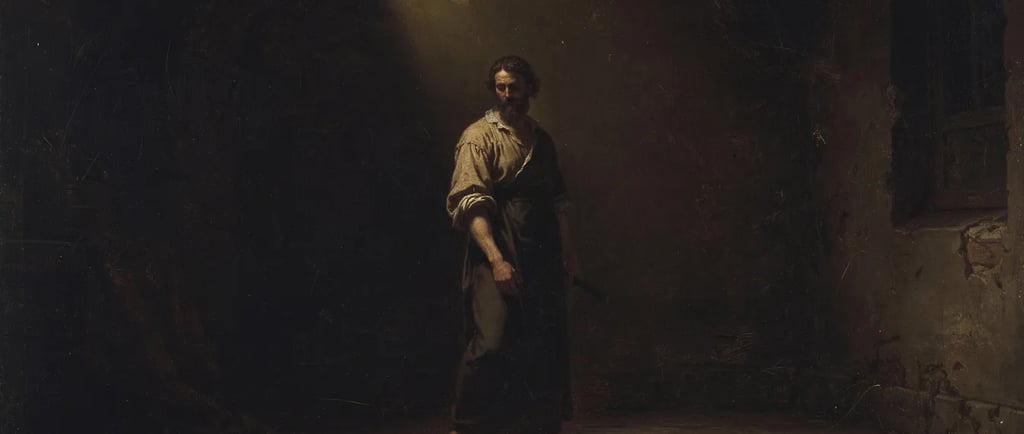
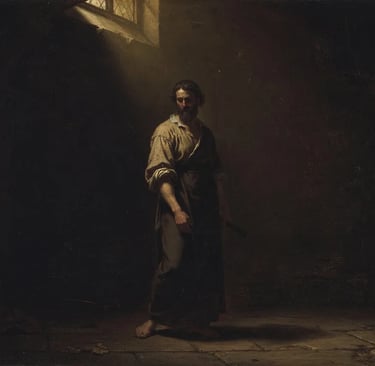
Michelangelo Merisi da Caravaggio stands as one of the most influential and controversial figures in Western art history. This Italian painter, active primarily in Rome, Naples, Malta, and Sicily between 1592 and 1610, transformed European painting through his radical approach to light, shadow, and human emotion. Caravaggio (1571–1610) was a revolutionary Italian painter whose dramatic, realistic style pioneered the Baroque movement.
Yet his artistic genius existed alongside a volatile temperament that made him as notorious for street brawls and murder as for masterpieces. He died at approximately 38 years old, fleeing a death sentence while seeking papal pardon—a fitting end to a life defined by extremes.
Why does Caravaggio still matter today? His pioneering use of tenebrism—that dramatic spotlight effect carving figures from darkness—fundamentally shaped Baroque aesthetics across Europe. His insistence on painting ordinary people with all their flaws, rather than idealized classical forms, influenced generations of artists from Rembrandt to modern filmmakers. And his tumultuous life continues to captivate through films, forensic investigations, and scholarly debates about what drove both his creativity and his violence.
This article traces Caravaggio’s life from his early childhood in plague-ravaged Milan through his meteoric rise in Rome, his violent downfall, years of exile producing increasingly haunting works, and mysterious death on a Tuscan beach. Along the way, we’ll examine his revolutionary technique, locate his most famous paintings in museums and churches today, and assess his enduring legacy in art history.
Early Life and Training (1571–1592)
Caravaggio was born Michelangelo Merisi on September 29, 1571, in Milan, to a family serving the Marchese of Caravaggio. His early childhood unfolded against a backdrop of plague and loss that would mark his character.
Key facts about his formative years:
Family background: Caravaggio’s father, Fermo Merisi, served as household administrator and architect-decorator to the marquess of Caravaggio, providing the family with connections to local nobility that would later prove crucial for patronage.
The 1576 plague: When a devastating epidemic killed over 15,000 in Milan, the family relocated approximately 40 kilometers southeast to the safer town of Caravaggio—the place that would give him his famous moniker.
Family tragedy: In 1577, both Caravaggio’s father and paternal grandfather died, likely from plague complications. This left young Michelangelo under his mother’s care, though she would also die in 1584, leaving her to raise all five children in poverty.
Powerful protectors: Through Caravaggio’s mother, the family maintained vital ties with the powerful Colonna and Sforza families. Costanza Colonna, Marchioness of Caravaggio, would provide shelter and protection throughout his life, including during his years as a fugitive. Francesco Sforza connections also opened doors in elite circles.
Artistic training: In 1584, at age 13, Caravaggio trained under the Milanese painter Simone Peterzano, beginning a four-year apprenticeship. Peterzano was a pupil of Titian, and through him, the young artist absorbed Venetian colorism—rich hues and atmospheric effects—alongside Lombard realism’s precise observation of textures.
Technical foundations: This period established his preference for working directly from live models rather than relying on preparatory drawings, a method that would distinguish his mature style. After his apprenticeship, Caravaggio likely stayed in the Milan-Caravaggio area, where he became familiar with the art treasures of Milan, including Leonardo da Vinci’s Last Supper.
By 1592, escalating troubles—described in documents as “certain quarrels,” including brawls and possibly wounding a police officer—forced the young man to flee Milan. He arrived in Rome destitute, without resources or fixed address, ready for reinvention.
From Milan to Rome: Forming a New Style (1592–1600)
When Caravaggio arrived in Rome around mid-1592, he possessed nothing but talent and ambition. Contemporary accounts describe him as “naked and extremely needy, without fixed address and without provision, short of money.” His transformation from obscure provincial to groundbreaking artist took less than a decade.
Struggling in the workshops
The young artist first lodged with Monsignor Pandolfo Pucci—nicknamed “monsignor Insalata” for his miserly meals of salad—before securing work in Giuseppe Cesari’s busy workshop. Cesari, known as Cavalier d’Arpino, was Pope Clement VIII’s favored painter. For approximately 18 months until January 1594, Caravaggio painted flowers and fruit in backgrounds of larger decorative schemes, earning minimal pay but refining his extraordinary still-life abilities.
Early Roman works and emerging style
Key paintings from this period reveal a young artist already challenging conventions:
Boy Peeling a Fruit (c. 1592-1593): Now at Hampton Court Palace, this work showcases his gift for capturing introspective mood and tactile detail.
Young Sick Bacchus (c. 1593-1594): Housed in the Galleria Borghese, this probable self-portrait painted after illness shows Caravaggio with pallid, green-tinged skin and jaundiced eyes—rejecting classical idealization for raw physical truth.
Boy with a Basket of Fruit (c. 1593): At the Biblioteca Ambrosiana in Milan, this virtuoso display of overripe fruit textures demonstrates his live-model approach and technical mastery.
Revolutionary technique
Caravaggio preferred to work directly on the canvas without sketches or drawings, often painting from live models, which allowed him to work quickly and intuitively. His technique involved scoring basic guides directly onto the canvas with the end of the brush handle, which was an unusual approach at the time and contributed to his unique style of realism.
He rejected the idealized, perfect bodies of the High Renaissance and instead depicted ordinary people from the streets, often including indecorous details—dirt under fingernails, sallow skin, the imperfections of real bodies.
Important friendships
The Italian artist built relationships crucial to his future success. Prospero Orsi introduced him to collectors. The architect Onorio Longhi (later implicated in various scandals) provided companionship. Most importantly, the 16-year-old Sicilian Mario Minniti became both close friend and frequent model, sitting for multiple paintings and later helping secure commissions during Caravaggio’s Sicilian exile.
Rise to Fame: The Most Talked-About Painter in Rome (1600–1606)
The transformation from struggling painter to Rome’s most celebrated—and controversial—artist hinged on a single patron: Cardinal del Monte.
Cardinal Francesco Maria del Monte’s patronage
Around 1595, Cardinal del Monte, a scholarly collector and future papal secretary, discovered Caravaggio’s work. He installed the painter in his household at the Palazzo Madama, surrounding him with intellectuals, scientists, and fellow artists. Cardinal del Monte commissioned numerous works, including Bacchus (c. 1595, now in the Uffizi Gallery, Florence) and the shield-mounted Medusa (c. 1597, also at the Uffizi). This patronage elevated Caravaggio from obscurity to elite Roman circles.
The Contarelli Chapel commission
The pivotal moment came in 1599. Caravaggio’s major works include The Calling of Saint Matthew and The Martyrdom of Saint Matthew, which were commissioned for the Contarelli Chapel in the Church of San Luigi dei Francesi in Rome and completed in 1600, marking a significant moment in his career.
These public altarpieces instantly catapulted him to fame. The Calling of Saint Matthew captures the precise moment Christ summons the tax collector—a divine finger pointing into a gritty tavern where figures in contemporary dress gamble and count coins. Light streams diagonally across the scene, a visible manifestation of grace entering worldly corruption.
Later, The Inspiration of Saint Matthew (1602) completed the chapel cycle, though it replaced a rejected first version. Caravaggio’s painting style often sparked controversy; for instance, his original version of Saint Matthew and the Angel was rejected by the church for being too vulgar and common, depicting the saint in a way that was considered inappropriate for a religious figure—barefoot, legs crossed, looking almost illiterate.
Scandal and innovation
His use of real-life models, including prostitutes, for religious figures in his paintings was seen as scandalous and led to criticism from contemporary audiences, who found his depictions of saints and biblical scenes to be vulgar. Courtesan Fillide Melandroni posed for several works. Saints appeared with dirty feet in tavern-like settings.
Yet this was precisely Caravaggio’s technique that made his work revolutionary. His style broke away from the idealized forms of the Renaissance, favoring a gritty, immediate reality.
Major works of this period
Several paintings solidified his status as an extraordinary genius:
The Taking of Christ (1602): Now at the National Gallery of Ireland, Dublin, this torchlit betrayal scene includes Caravaggio’s self-portrait as the torch-bearing figure at right.
The Incredulity of Saint Thomas (c. 1601-1602): The Incredulity of Saint Thomas, painted around 1601-1602, is one of Caravaggio’s most famous paintings, depicting the moment when Thomas the Apostle touches the wounds of the resurrected Christ, showcasing Caravaggio’s dramatic use of tenebrism and realism.
Amor Vincit Omnia (1601-1602): Amor Vincit Omnia, painted in 1601-1602, depicts Cupid trampling over symbols of war and reason, showcasing Caravaggio’s unique approach to classical themes and his characteristic realism. Now at the Gemäldegalerie, Berlin.
Supper at Emmaus (1601): The Supper at Emmaus, painted around 1601, illustrates the moment when Jesus reveals his identity to two of his disciples after his resurrection, demonstrating Caravaggio’s mastery of light and shadow to create a dramatic narrative. Currently at the National Gallery, London.
Conversion of St. Paul and Crucifixion of Saint Peter (1600-1601): Both installed in the Cerasi Chapel at Santa Maria del Popolo, Rome.
The Baroque bad boy
Caravaggio’s notoriety grew alongside his fame. Caravaggio was notorious for his violent behavior, frequently engaging in brawls and street fights, which led to numerous arrests and legal troubles throughout his life. Between 1600 and 1606, he accumulated over 20 arrests for dueling, libel against rival artist Giovanni Baglione, illegal sword-carrying, and tavern assaults.
Caravaggio’s tumultuous life included multiple arrests for various offenses, including carrying an unlicensed sword, throwing a plate of artichokes at a waiter, and scarring a guard, reflecting his volatile personality and lifestyle. Throughout his life, Caravaggio struggled with his temper and was often described as being difficult to get along with, leading to a reputation that overshadowed his artistic achievements.
As Giovanni Pietro Bellori later wrote, noting that ever ready to engage in a fight, after a fortnight’s work he will swagger about for a month or two with a sword at his side—perfectly capturing how personal life and professional achievement remained inseparable in Caravaggio’s life.
Violence, Legal Troubles, and the 1606 Killing
The collision between genius and violence that defined Caravaggio’s work finally erupted into murder on a Roman ball court.
A pattern of violence
Caravaggio’s personal life was marked by escalating conflict. Roman judicial records document at least 13 cases between 1600 and 1606:
1600: Sword violations—Caravaggio carried his blade illegally through Rome’s streets
1604: A libel suit from rival Giovanni Baglione, whom Caravaggio mocked in satirical poems
1605: Assault on a waiter in a tavern
Multiple incidents: Insults to public officials, street brawls, attacks with various weapons
Andrew Graham-Dixon and other biographers note that the art historian examining Caravaggio’s police records finds a man seemingly unable to walk Rome’s streets without conflict.
The fatal brawl
In 1606, Caravaggio killed a young man named Ranuccio Tomassoni during a brawl, which forced him to flee Rome with a death sentence hanging over him.
The incident occurred on May 28 or 29, 1606, during a game on one ball court—pallacorda, a tennis-like game popular among Romans. What started as sport ended in death. Caravaggio, then 34, inflicted a deep thigh wound that severed Tomassoni’s femoral artery. The 33-year-old Tomassoni bled to death.
Competing theories about motive
Several explanations have been proposed:
Gambling debt: Caravaggio reportedly owed money, possibly from the game itself
Romantic rivalry: Both men had connections to courtesan Fillide Melandroni, and Tomassoni’s sister was also involved in the dispute
Honor dispute: Some historians suggest a failed castration attempt—an honor punishment—went fatally wrong
Political tensions: Gang and neighborhood rivalries may have contributed
Immediate consequences
The papal court condemned Caravaggio to death in absentia, placing a 1,000-scudo bounty on his head. Anyone could legally kill him and claim the reward. Howard Hibbard and other scholars note this transformed him from celebrity to hunted man overnight.
He fled south immediately, sheltering first on Colonna family estates before reaching Naples. Caravaggio knew he could never safely return to Rome without a papal pardon.
Art reflecting trauma?
Art historians caution against over-interpreting biography into iconography. Yet the recurring decapitation motifs in works like Judith Beheading Holofernes (c. 1598-1599, begun before the killing) and the later David with the Head of Goliath (1610, where Caravaggio depicted himself as the severed head) suggest unavoidable psychological resonance. The painter who fled a beheading sentence repeatedly painted beheadings.
Exile in Naples, Malta, and Sicily (1606–1610)
The final four years of Caravaggio’s life became a fugitive’s odyssey through the Mediterranean, producing some of his most haunting works while fleeing enemies both official and personal.
Naples: First refuge (1606-1607)
Caravaggio found shelter in Naples under the protection of the Colonna family. Despite his status as condemned murderer, major commissions arrived immediately.
His most significant Neapolitan work, The Seven Acts of Mercy (1607), hangs today at the Pio Monte della Misericordia. This monumental canvas compresses all seven corporal works of mercy—feeding the hungry, sheltering travelers, clothing the naked, visiting prisoners and the sick, burying the dead—into a single nocturnal street scene. Emaciated bodies emerge from darkness, illuminated by stark light shafts characteristic of his mature tenebrism.
Malta: Knighthood and disgrace (1607-1608)
In summer 1607, Caravaggio sailed to Malta, seeking membership in the prestigious Knights of Saint John (Knights of Malta). The grand master recognized his talent, commissioning major works for St. John’s Co-Cathedral in Valletta.
The Beheading of Saint John the Baptist (1608) remains his largest canvas at 361 by 520 centimeters. Blood pooling beneath the saint’s neck spells out “f. Michelangelo”—his only signed work, using the Latin humility formula. The painting depicts the execution in progress, the executioner reaching for his knife to complete the decapitation—a scene the artist now knew intimately from personal experience.
He received his knighthood in 1608, briefly becoming a Knight of Malta. But by October 1608, Caravaggio’s violent past caught up with him. After assaulting fellow knight Girolamo Garafano in a Valletta brawl, he was imprisoned in Fort Sant’Angelo. His dramatic escape—reportedly scaling walls and hiding in church crevices before fleeing by boat—ended his knightly status. The order expelled him as a “foul and rotten member.”
Sicily: Wandering and paranoia (1608-1609)
Caravaggio returned to Sicily, moving restlessly between cities:
Syracuse (nine months): Reunited with old friend Mario Minniti, he painted The Burial of Saint Lucy (1608), now in Syracuse, showing the saint’s interment with unprecedented psychological depth.
Messina: The Resurrection of Lazarus (1609) and The Adoration of the Shepherds (1609) show increasingly stripped-down compositions—isolated figures emerging from void-like darkness.
Palermo: The Nativity with St. Francis and Saint Lawrence (1609), tragically stolen in 1969 and widely believed destroyed, possibly by Mafia hands.
Stylistic changes in exile
Andrea Pomella and other scholars note how his late style darkened dramatically. Colors shifted to somber earth tones. Figures became increasingly isolated. Brushwork grew freer, almost impressionistic. The Martyrdom of Saint Ursula (1610), painted in Naples on his final return, captures the arrow’s impact with blurred urgency suggesting his own exhaustion and paranoia.
After fleeing Rome, Caravaggio lived in constant fear of retribution for his violent past, which included being ambushed and attacked in Naples, leaving him permanently disfigured. This 1609 assault outside a tavern scarred his face severely—possibly by Knights of Malta seeking revenge, possibly by Tomassoni relatives.
Mysterious Death in 1610
Caravaggio’s death proved as dramatic and unresolved as his life. In June 1610, word reached him that a papal pardon might finally be possible. He prepared to return to Rome.
The journey north
He sent intercessory paintings ahead—works designed to demonstrate his contrition and genius simultaneously:
David with the Head of Goliath (c. 1610, Galleria Borghese, Rome): A haunting self-portrait as the severed head of Goliath, held by young David—the murderer presenting his own severed head as peace offering.
Salome with the Head of John the Baptist (c. 1610, National Gallery, London): Another decapitation, another indirect confession.
Boarding a felucca (small coastal vessel), Caravaggio sailed north from Naples. Somewhere near Palo, the captain allegedly abandoned him and his paintings. Detained briefly on old warrants, he then traveled approximately 150 kilometers overland to Porto Ercole on the Tuscan coast.
Death at Porto Ercole
On July 18 or 19, 1610, Caravaggio died at approximately 38 years old. Contemporary accounts mention “a fever” amid summer heat. No autopsy was performed. No witnesses left detailed accounts.
Competing theories
Multiple explanations have been proposed:
Malaria: Endemic to the marshlands around Porto Ercole, consistent with fever symptoms
Sepsis: His disfiguring Naples wounds may have become infected during travel
Syphilis: Chronic debility from the disease was common among his social circle
Lead poisoning: Modern forensic analysis of remains found in Porto Ercole (99% DNA match established in 2010) revealed lead levels of 1,400 parts per million versus the normal 50—potentially explaining both his erratic behavior and early death
Murder: Revenge by Tomassoni relatives or Knights of Malta agents remains possible
The exhumed bones showed evidence of violent life: skull fractures, arsenic traces (possibly from syphilis treatments). Yet definitive cause of death remains unknown.
What we know with certainty: art history lost one of its most influential figures before his 39th birthday, his body abandoned near a beach while paintings meant to secure his freedom traveled elsewhere.
Caravaggio’s Style: Chiaroscuro, Tenebrism, and Realism
Understanding Caravaggio’s work requires grasping three interconnected innovations that transformed European painting.
Chiaroscuro and tenebrism
Chiaroscuro—Italian for “light-dark”—describes the modeling of forms through tonal gradations. Caravaggio was a pioneer of tenebrism, a technique that uses intense chiaroscuro to create dramatic contrasts of light and shadow, dominating the painting with darkness and producing a spotlight effect.
In works like The Calling of Saint Matthew, light streams from an unseen source at upper right, carving figures from surrounding darkness. This isn’t natural illumination—it’s theatrical staging that heightens psychological drama without relying on linear perspective.
Radical naturalism
He combined intense naturalism with tenebrism to heighten emotional tension, often using everyday people as models for biblical figures. Caravaggio used ordinary people as models for saints and biblical figures, painting them with all their flaws—wrinkles, dirt, torn clothes, the bodies of laborers rather than classical ideals.
Examples of his unflinching observation:
The Basket of Fruit (c. 1599, Biblioteca Ambrosiana, Milan): Wormholes, bruises, and wilting leaves rendered with photographic precision
Madonna dei Pellegrini (1604-1606, Sant’Agostino, Rome): Barefoot pilgrims kneel before the Virgin, their dirty soles prominent in the composition
Judith Beheading Holofernes: Arterial blood sprays in directions that defy physics but maximize visceral horror
Working method
Caravaggio’s technique departed radically from academic practice:
He worked directly on canvas with minimal preparatory drawings
Models posed for hours in darkened studios, lit by controlled light sources
His technique involved scoring basic guides directly onto the canvas with the end of the brush handle
Alla prima painting—laying final colors immediately—created spontaneous vitality
This approach allowed rapid work but risked muddiness. More importantly, it captured the immediacy that made his religious scenes feel like witnessed events rather than staged tableaux.
Counter-Reformation resonance
His gritty realism aligned powerfully with post-Tridentine Catholic theology. The Council of Trent (1545-1563) emphasized making religious experience accessible to ordinary believers. Caravaggio’s tavern Madonnas and laborer apostles embodied this democratic spirituality—grace available to everyone, not just the classically beautiful.
Major Works and Where to See Them
Among Caravaggio’s approximately 80-90 authenticated paintings, several define his achievement and remain accessible to viewers today.
The Calling of Saint Matthew (1599-1600) remains in its original location in the Contarelli Chapel, San Luigi dei Francesi, Rome, where the divine summons pierces a tax collector’s office with theatrical light. Just steps away in the same church, The Martyrdom of Saint Matthew shows the saint’s violent death amid fleeing witnesses.
Judith Beheading Holofernes (c. 1598-1602) hangs in the Galleria Nazionale d’Arte Antica at Palazzo Barberini, Rome. Judith Beheading Holofernes, created between 1598 and 1602, is a striking example of Caravaggio’s ability to convey intense emotion and drama, depicting the biblical heroine Judith in the act of beheading the Assyrian general Holofernes—her face showing both determination and revulsion as blood sprays across white bedsheets.
The Taking of Christ (1602) reemerged dramatically in 1990, identified in a Dublin Jesuit residence. Now at the National Gallery of Ireland, it captures Judas’s betrayal with torchlight reflecting off soldiers’ armor.
Basket of Fruit (c. 1599) demonstrates his still-life mastery at the Biblioteca Ambrosiana, Milan—fruit and leaves rendered with almost scientific precision despite visible decay. The Fortune Teller (two versions, c. 1594 and c. 1595) can be seen at both the Louvre and the Capitoline Museums.
Bacchus (c. 1595) and the shield-mounted Medusa (c. 1597) occupy the Uffizi Gallery, Florence, alongside other works that chart his early development. The Sick Bacchus, likely a self-portrait, remains at the Galleria Borghese, Rome.
Supper at Emmaus (1601) captivates viewers at the National Gallery, London, where everyday bread and fruit burst from darkness at the moment of recognition. Amor Vincit Omnia (1601-1602) sprawls triumphantly at the Gemäldegalerie, Berlin.
The Conversion of St. Paul and Crucifixion of Saint Peter (both 1600-1601) remain in the Cerasi Chapel at Santa Maria del Popolo, Rome—though not near Saint Peter’s Basilica, they represent his mature Roman achievement.
The Beheading of Saint John the Baptist (1608)—his largest and only signed work—dominates the Oratory at St. John’s Co-Cathedral, Valletta, Malta. The Seven Acts of Mercy (1607) can still be seen at the Pio Monte della Misericordia, Naples.
Tragically, the Nativity with St. Francis and Saint Lawrence (1609), stolen from a Palermo oratory in 1969, represents his work’s dramatic modern history. Widely believed destroyed—possibly by Mafia after failed ransom attempts—it remains among the world’s most wanted stolen artworks, occasionally spurring rumors of survival in private collections.
Other paintings scattered across Fort Worth, Madrid, Vienna, and private collections continue emerging through attribution studies, though forgeries and disputed works complicate the catalogue.
Legacy, Caravaggisti, and Modern Reception
Caravaggio’s impact rippled across Europe immediately, declined for centuries, then resurged dramatically in modern consciousness.
The Caravaggisti
His dramatic lighting and psychological realism spawned followers across the continent. The Caravaggisti, a group of artists influenced by Caravaggio, emerged in Rome and included notable figures such as Orazio Gentileschi and Giovanni Baglione, who adopted his dramatic style and naturalism—ironically including the rival he’d mocked in satirical verses.
Key Caravaggisti and their contributions:
Artemisia Gentileschi: Orazio’s daughter became the movement’s most powerful female voice, her Judith paintings rivaling Caravaggio’s intensity
Bartolomeo Manfredi: Spread Caravaggesque techniques through Roman workshops
Georges de La Tour: French master of candlelit nocturnes
Utrecht Caravaggisti: Caravaggio’s work had a significant impact on the development of Utrecht Caravaggism, where artists like Hendrick ter Brugghen and Gerrit van Honthorst were inspired by his style after traveling to Rome, bringing tenebrism to the Netherlands
Flemish artist Peter Paul Rubens was influenced by Caravaggio during his time in Rome, incorporating elements of Caravaggio’s tenebrism and realism into his own works after returning to Antwerp. Even Rembrandt, who never visited Italy, absorbed Caravaggesque lighting through Dutch intermediaries.
Centuries of decline
After 1610, hostile biographers shaped reception for generations. Giovanni Baglione’s 1604 rivalry colored his biographical account, calling Caravaggio “violent and scandalous.” Giovanni Pietro Bellori’s 1672 critique decried his “lack of disegno”—the drawing skills considered fundamental to academic painting.
Without a formal workshop to perpetuate his methods, Caravaggio’s style fragmented among followers who often emphasized sensationalism over substance. By the eighteenth and nineteenth centuries, he was dismissed as a “naturalist aberration.”
Twentieth-century rediscovery
Roberto Longhi’s pioneering scholarship, beginning with his 1913 study Caravaggio e i Caravaggeschi and expanded throughout his career, established modern Caravaggio studies. Longhi attributed lost works, traced influences, and proclaimed him “the other Michelangelo”—trading Sistine sublimity for streetlight revelation.
Contemporary fascination
Modern engagement takes multiple forms:
Derek Jarman’s homoerotic film Caravaggio (1986) explored the artist’s possible sexuality and violence
Martin Scorsese references Caravaggesque lighting throughout his films
2010 forensic studies on Porto Ercole remains merged crime investigation with art history
Attribution controversies regularly generate headlines—possible Judith variants valued at $100 million or more
The high market value of his rare authenticated works, continuing thefts and recoveries, and forensic investigations into his death keep Caravaggio visible in ways few Old Masters achieve. Major artists of his era rarely command equivalent popular attention.
Caravaggio in the Context of Italian Baroque and the Counter-Reformation
Situating Caravaggio within his historical moment reveals both what made him revolutionary and why his revolution succeeded.
Baroque alternatives
Within Italian Baroque painting (c. 1600-1750), his gritty tenebrism stood opposite Annibale Carracci’s Bolognese classicism. Where Carracci—decorating the Palazzo Farnese with harmonious figures and balanced compositions—represented refined academic tradition, Caravaggio offered visceral immediacy. Both approaches shaped Baroque development, but Caravaggio’s influence proved more far-reaching across national boundaries.
Counter-Reformation theology made visible
Caravaggio’s paintings, characterized by their intense realism and emotional depth, were pivotal in the Counter-Reformation, as they depicted religious themes in a way that resonated with the common people, thus influencing the direction of religious art.
The Catholic Church, responding to Protestant iconoclasm and critique, needed images that moved believers emotionally. Caravaggio’s focus on marginalized figures—prostitutes, laborers, the poor—embodied the theological principle that grace reaches everyone. When he painted dirty-footed pilgrims adoring the Madonna, he made Counter-Reformation populism visible.
His works functioned as preaching: Matthew summoned from sin, Thomas touching wounds to believe, Saul blinded on the Damascus road. These weren’t distant historical events but immediate encounters available to any viewer willing to look.
Enduring significance
More than 400 years after his death, Caravaggio’s canvases still command attention through sheer emotional force. The same qualities that shocked seventeenth-century audiences—unflinching realism, dramatic lighting, ordinary bodies in sacred roles—continue captivating viewers who encounter his work in Roman churches or scattered museums from Dublin to Berlin to Fort Worth.
His legacy endures not despite his tumultuous life but perhaps because of it. The raw humanity he captured in paint reflected raw humanity he lived. Whether that connection was cause, effect, or coincidence, the result remains undeniable: an Italian painter who transformed Western art through sheer force of vision, leaving works that pierce souls four centuries after his hand stopped moving.
For those seeking to understand Italian Baroque painting, there is no better starting point than standing before a Caravaggio—watching light carve figures from darkness, seeing saints with dirty feet, feeling the drama he staged in paint. His influence on how we see remains his greatest achievement.
© PalazzoBarberini.info 2025. All rights reserved.
This is not an official website. This site is offering links to authorized ticket resellers and might earn commission on tickets.